The government has officially endorsed Kenya’s first exclusively online TVET platform, expanding affordable technical training access for youth.
The Kenyan government has officially sanctioned the launch of the nation’s first entirely digital Technical and Vocational Education and Training platform, a groundbreaking initiative designed to democratize technical skills acquisition. Spearheaded by the EUNI Training Institute in strategic collaboration with the European Business University of Luxembourg, the eTVET model eliminates geographical and financial barriers that have historically sidelined marginalized youth and persons with disabilities.
The stakes for Kenya’s economic future are profound. As the country grapples with chronic youth unemployment and a rapidly evolving digital economy, traditional brick-and-mortar technical institutes struggle to absorb the vast number of secondary school graduates. By migrating practical skills training to an exclusively online framework, the government aims to forge a highly competent, globally competitive workforce capable of servicing the international labor market directly from their home counties.
Written by European Business Institute Luxembourg (EBU)
EBU CHAIRPERSON REPRESENTS THE INSTITUTE AT WORLD BANK SPRING MEETINGS IN WASHINGTON D.C.
EBU Joins Global Leaders, Investors, and Governments to Champion Skills Development and Investment in Africa
The Board Chairperson, Helen Chedza Chilisa of the European Business Institute Luxembourg (EBU), recently joined global leaders, investors, entrepreneurs, and government delegations at the prestigious World Bank Spring Meetings held in Washington D.C., reinforcing EBU’s commitment to Africa’s development agenda on the world stage.
Notably, the Chairperson participated as a Principal of the SEMAFOR World Economy 2026 Cohort — an elite programme that brings together emerging and established leaders in the global development and economic space to engage with key multilateral platforms.
During the meetings, the Chairperson held strategic engagements with investors, entrepreneurs, and government delegations from across the globe, positioning EBU as a key player in Africa’s investment and human capital development landscape.
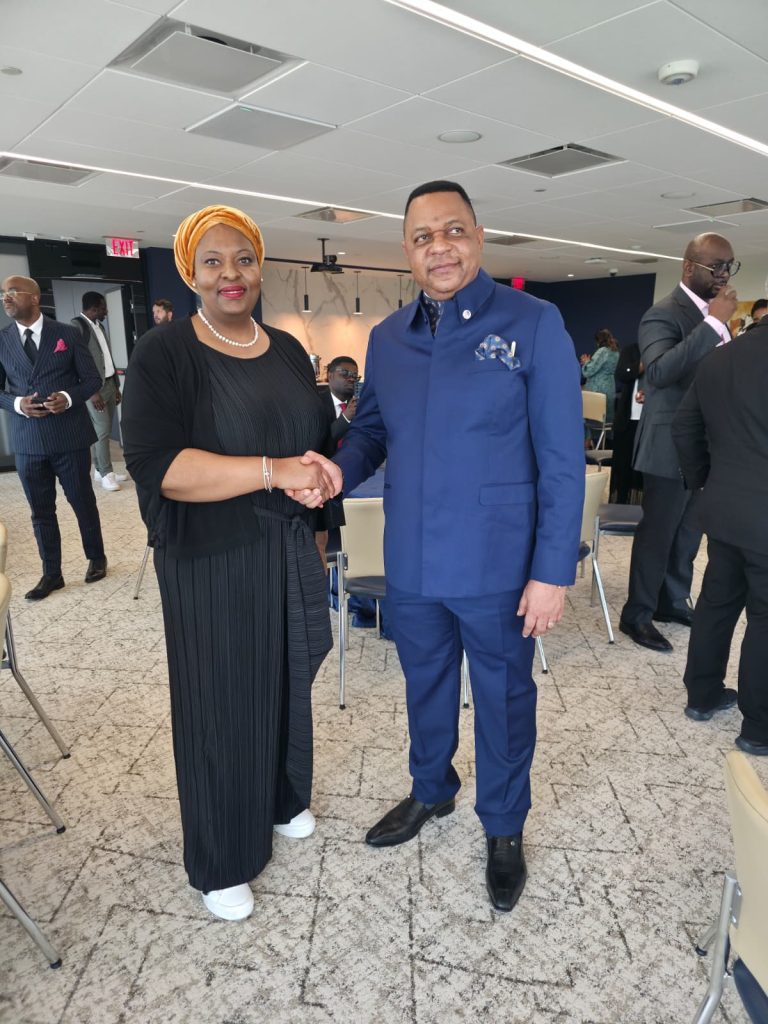
A significant highlight was EBU’s presentation of 3,000 scholarships to the Democratic Republic of Congo, a milestone moment captured alongside the Director General of the Ministry of SMMEs and Industrialisation. This gesture underscores EBU’s unwavering dedication to bridging the skills gap across the African continent.
“While Africa continues to seek and build investment opportunities, we must not leave skills development behind. Whether soft skills or hard skills — skills go hand in hand with investment. At EBU, we are partnering with institutions and governments across Africa and the globe to fill this gap, recognising that Africa’s growing youth population will not only need jobs — they will need to create jobs. And job creation requires skills.”
— Helen Chedza Chilisa, Board Chairperson, European Business Institute Luxembourg
EBU continues to forge meaningful partnerships with academic institutions, governments, and development organisations globally, championing a future where investment and human capital development go hand in hand across the African continent.
The European Business Institute Luxembourg (EBU) is a non-profit higher education institution dedicated to broadening access to quality education and building human capital across Africa and beyond. Through partnerships with governments, academic institutions, and development organisations, EBU is committed to advancing UN SDG Goal 4 — Quality Education — and equipping the next generation of leaders with the skills to drive sustainable development.
Expanding Access, Empowering Futures: The CAF and EBU Scholarship Impact
In an increasingly digital world, access to education should not be limited by physical, financial, or structural barriers. This belief formed the foundation of the partnership between the Crystal Asige Foundation and the European Business Institute (EBU) — a collaboration focused on making inclusive, accessible, and career-relevant education a reality for persons with disabilities across Kenya.
A First Cohort That Set the Foundation
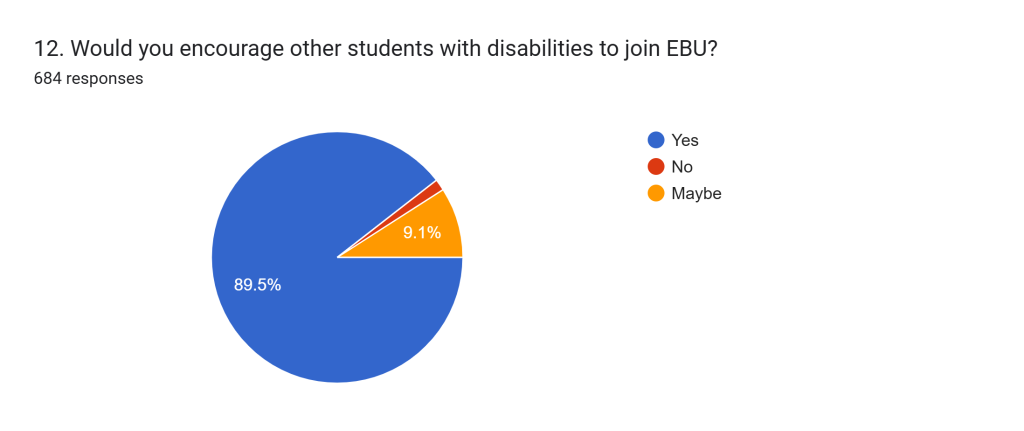
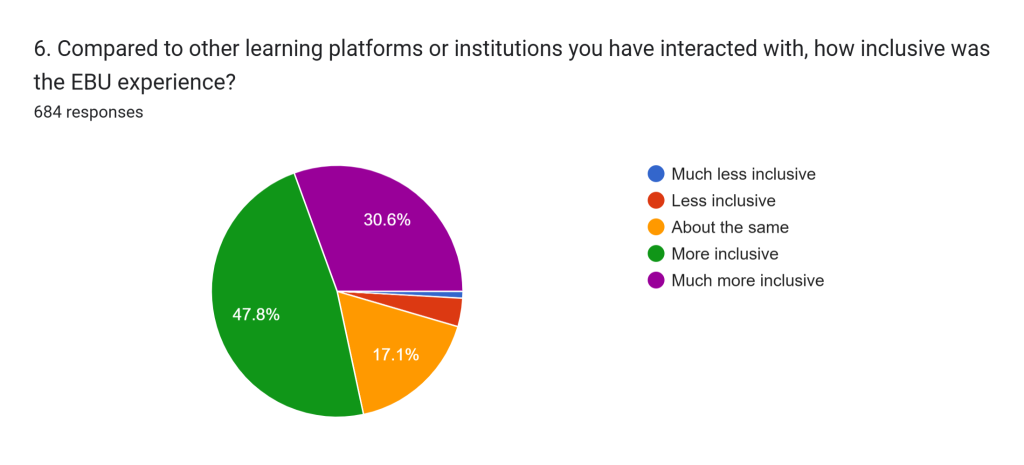
The response to the first intake was a clear reflection of the need and demand for inclusive education.
Over 4,000 applications were received
850 persons with disabilities were successfully enrolled
Through a fully online, scholarship-supported model, learners gained access to structured courses across business, technology, and professional fields. More importantly, they gained confidence, digital skills, and the opportunity to participate in formal education systems designed with accessibility in mind.
Watch the Certificate Award Ceremony. Hear from the students.
For many students, this was more than a course, it was a first step toward independence, employability, and inclusion.
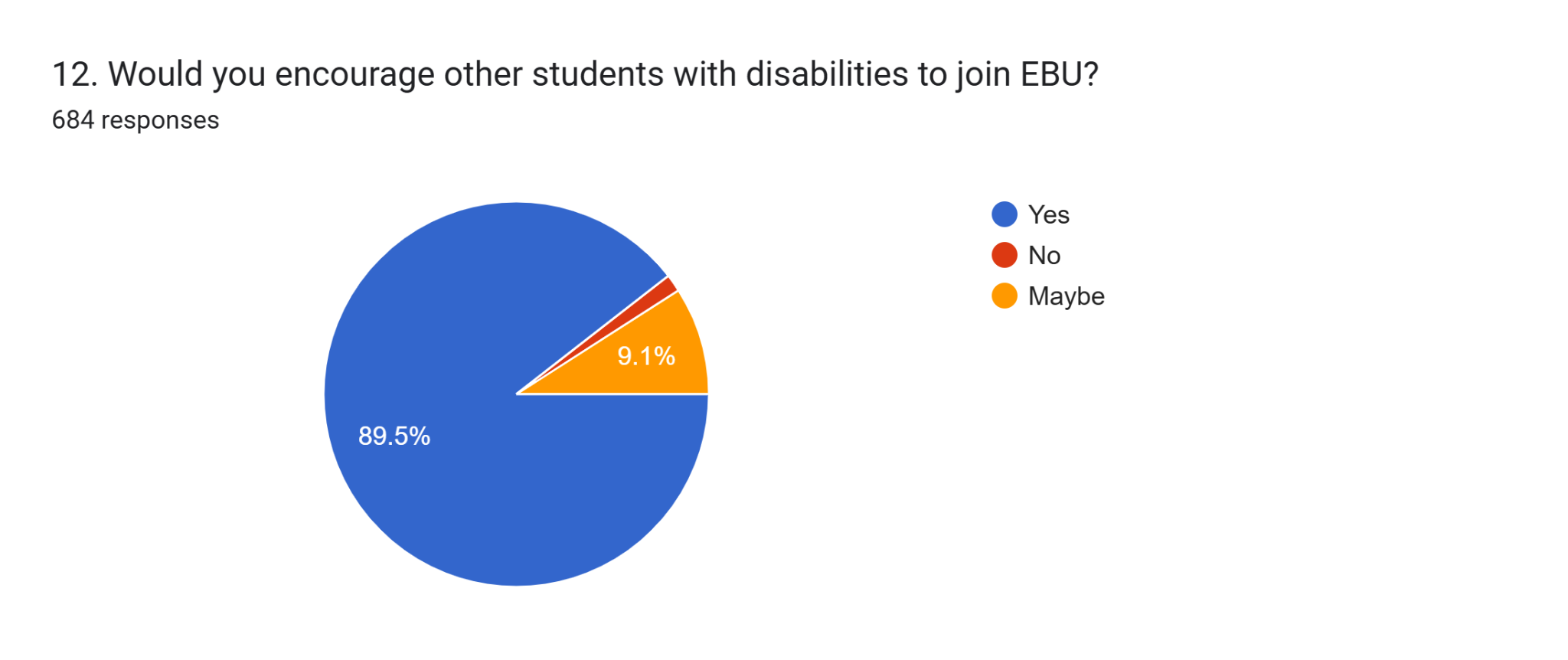
Feedback from the students
Designed for Accessibility, Built for Inclusion
At the core of this initiative is a learning environment intentionally designed to remove barriers.
The virtual learning platform is built on a Learning Management System aligned with Web Content Accessibility Guidelines (WCAG) Level AA, ensuring equal access to information and functionality for all learners.
Key accessibility features include:
Compatibility with screen readers, with continuous improvements such as alt text for all images
Learning materials available in multiple formats — including text, audio, and video
Accessible assessments, including quizzes with multiple-choice questions instead of complex interactions like drag-and-drop
A system designed to be perceivable, operable, understandable, and compatible for users with varying levels of visual and hearing ability
This approach ensures that accessibility is not an add-on — but a core part of the learning experience.
Learning That Leads to Opportunity
Beyond academic completion, the program focuses on equipping learners with practical, future-ready skills. Students engage with structured content, develop digital literacy, and build the discipline required for online learning and professional environments.
The initiative also connects graduates to broader opportunities, including pathways into internships, entry-level roles, and continued professional development.
A Growing Impact — Applications Now Open
Building on the success and lessons of the first cohort, the Crystal Asige Foundation, in partnership with EBU, is proud to announce a new intake of scholarships.
These scholarships continue to focus on empowering persons with disabilities through accessible, high-quality education designed for real-world impact.
Applications are now open — and spaces are limited.
The journey toward inclusive education is ongoing. The first cohort demonstrated both the potential and the importance of designing systems that are accessible, supportive, and outcome-driven.
Through continued collaboration, innovation, and commitment, the CAF × EBU partnership remains focused on one goal:
Ensuring that education is not just accessible — but truly inclusive, empowering, and transformative.
By Prof. Dr. James Mulli Academic Dean, European Business University
Lessons from Luxembourg show that its 42.5% AI usage is not a vanity metric, and that for Kenya, it is a mirror and a challenge.
Across Europe, artificial intelligence adoption is now a marker of economic direction. Northern Europe is out in front: Norway, Denmark, Switzerland and digital-first states like Estonia, Malta, and Finland all record AI usage above 46%, while Luxembourg, where the campus of the European Business Institute (EBU) is located, sits at about 42 -43%, comfortably ahead of the EU average and larger neighbours. These are not just numbers; they are early signals of which economies are quietly rewiring how people learn, work, and do business. This is already translating into higher productivity and faster learning in the workplace, especially in services and knowledge work. Studies from call centres and service companies show that when employees work with AI agents, they resolve about 14% more customer issues per hour, with no drop in customer satisfaction, and less experienced workers catch up to their seniors much faster. If a small country like Luxembourg is moving early on AI, it is because those gains compound into higher output and competitiveness over time, exactly the opportunity Kenya risks missing if its usage stays informal and shallow.
The lesson here is that Kenya should be reading these signals very carefully.
Kenya’s youth and mobile advantage
Thankfully Kenya is not starting from zero. It is starting from a position of strength.
Mobile penetration has already crossed saturation levels, with more active SIM cards than people and over 70 million devices connected to networks, translating to a penetration rate above 130%. Among young people aged 15-24, the data shows that a clear majority now own mobile phones, and a large share have smartphones and use social media daily. Kenya’s story is one of a mobile-native generation, deeply comfortable with digital platforms, payments, and communication.
This is precisely the kind of foundation that AI needs. Europe had to build digital habits and infrastructure over decades; Kenya already has them in its pocket and quite literally. The question is not whether Kenya’s youth are online. The question is whether they will use AI to transform their lives and their country, or simply consume what others create.
What Europe’s AI numbers are really saying
When we look closely at the European data a pattern emerges.
Across Europe, AI is no longer just a new gadget; it is an economic lever that is already moving real numbers. In one widely cited study of more than 5,000 customer‑support agents in a Fortune 500 firm, those with access to a generative‑AI assistant handled 13.8% more issues per hour and increased their successful resolution rate by about 1.3%, with the biggest gains over 30% seen among the least experienced staff. Other research on AI coding tools finds that developers using AI assistants complete routine coding tasks 20-40% faster, especially when generating boilerplate, tests, and documentation.
When you plug these kinds of improvements into macroeconomic models, the impact is non‑trivial. Economists estimate that generative AI alone may already be adding roughly 1 percentage point to productivity growth in advanced economies, on top of existing trends. That sounds small, but over a decade it means more output, higher wages for skilled workers, and greater fiscal space for governments that move early. This is why usage rates like Luxembourg’s 42.5% are starting to act as a proxy for future output: they tell you how many workers are learning to use “digital leverage” to do more with the same hour of time.
The real distinction, as you rightly note, is between shallow and deep AI usage. Someone asking a chatbot to summarise a news article counts as AI usage, but its impact is modest. A small business automating its invoicing, customer support responses, and basic marketing copy using AI is changing its cost structure and productivity. A software team that systematically uses AI for code generation, documentation, and test creation is not just “using AI”; it is compressing weeks of routine work into days and freeing engineers to focus on design and innovation
Perhaps most important for Kenya, the next divide is generational. Even where national usage is moderate, younger people are adopting AI tools far faster than older populations. That means the real gap will increasingly be within countries, not only between them. In a country like Kenya, with a predominantly young population, that generational tilt can be turned into a strategic asset, if it is guided.
Kenya at a crossroads: user or leader?
Kenya has already proven it can lead.
The world watched as M‑Pesa transformed everyday transactions and put Kenya on the map as a fintech innovator. Bill Gates placed a video highlighting this achievement:
But mobile money was just the first chapter. AI is the next frontier, and it is far broader: it touches finance, agriculture, health, education, logistics, justice, and as the youth have shown, creative industries.
If Kenyan youth merely become heavy users of foreign AI platforms, the country risks repeating a familiar pattern: local talent feeding global systems, while most of the value is captured elsewhere. If, instead, Kenya chooses to build, adapt, and localise AI, it can create solutions that understand Kiswahili, Sheng, local business realities, rural connectivity constraints, and informal sector dynamics in a way no foreign model ever will.
Luxembourg’s 42.5% AI usage shows what early momentum looks like. The real test for Luxembourg and for Kenya is whether everyday use of AI can be converted into durable advantage in skills, finance, and innovation.
From consumption to capability: what Kenya must do
To turn its demographic and mobile strengths into AI leadership, Kenya needs to move beyond rhetoric and into deliberate strategy built around its young population.
Here are some key steps that are within reach:
Embed AI skills early From secondary school to TVETs and universities, AI literacy should not be a niche elective. It should be part of core digital education: data literacy, prompt design, basic coding, critical thinking about algorithms, and ethical use. EBUs TVET EUNI training Institute will be leaning in this direction. (https://eti.ebulux.lu/)
Shift from “using apps” to “building systems” Youth should be encouraged and trained to move from consumers of AI tools to creators of AI services, chatbots for county governments, decision-support tools for farmers, AI‑assisted diagnostics for clinics, and local-language tutoring systems.
Back youth with ecosystems, not slogans Innovation hubs, incubators, and county-level digital labs should provide access to computing resources, mentorship, and real-world data (while respecting privacy) so young people can build tangible solutions, not just pitch decks.
Use public policy to signal seriousness Just as Kenya created an enabling environment for mobile money, it can do the same for AI: regulatory sandboxes, clear data-protection rules, incentives for AI investment, and public procurement that favours locally built AI solutions for public services.
Connect talent to global standards Kenyan youth must be trained not just to meet local needs, but to compete and collaborate globally, through remote work, global research projects, open‑source contributions, and industry-grade certifications.
In customer service Kenyan telcos, banks, SACCOs, and e‑commerce firms could deploy AI assistants that help agents answer more queries per hour, with better consistency. Global studies suggest a realistic productivity gain of around 10-15%, with the largest jumps for junior staff. For a call centre employing 1,000 agents, that is the equivalent of hiring 100-150 extra people without adding a single desk.
In small business operations Jua kali entrepreneurs, boda‑boda associations, and micro‑retailers can use AI to generate invoices, manage simple bookkeeping, draft contracts, and reply to customers on WhatsApp automatically. Each small task saved is minutes back in the day; scaled across millions of micro‑enterprises, it becomes a boost to national productivity.
In software and digital services Kenyan developers already building for fintech, agritech, and logistics can use AI coding assistants to cut time spent on boilerplate code by up to 30–40% on routine tasks. That means a single developer can ship what previously required a small team, or a team can ship more features per release cycle.
In research and knowledge work Policy analysts, journalists, lawyers, and academics can offload first‑draft research, document review, and summarisation to AI, turning days of desk work into hours and focusing human effort on judgment and local nuance. This matters in a country where public‑sector capacity is stretched and private‑sector professionals are time‑poor.
Once you see AI as a multiplier on every knowledge worker, the stakes for a young, service‑oriented economy like Kenya’s become clear. If Kenya gets this right, AI will not be an imported revolution; it will be a Kenyan-led reimagining of how African societies function in a digital age.
Luxembourg, Kenya, and a shared AI classroom
There is another layer to the Luxembourg story that matters for Kenya.
While Luxembourg is climbing the AI adoption charts, it is also investing heavily in AI-related education and skills. At the same time, the European Business University and European Business Institute in Luxembourg (EBU) have made a strategic bet on Kenya’s youth by offering large-scale online scholarships and programmes aimed particularly at African and Kenyan learners.

These institutions have already enrolled more than 30,000 students globally, with a significant share from Kenya, many of whom benefit from tuition‑free or heavily subsidised scholarships. Kenyan students have gained access to structured programmes in business, technology, and AI, often without the prohibitive costs that block access to international education.

Today, that commitment is deepening around AI and digital innovation. The European Business University and Institute in Luxembourg are focused on programmes such as the Certificate in Digital Intelligence and Technology Innovation, AI Professional Certificates, and a suite of “AI for Leaders” courses in finance, healthcare, business sustainability, and general management, alongside advanced modules like Deep Learning with TensorFlow, Natural Language Processing, and Introduction to Python with AI integration, as well as a Master’s in Data Science and AI. Through scholarships specifically extended to Kenyan learners, many students in Kenya have already benefited by gaining internationally recognised qualifications, industry-relevant AI skills, and direct exposure to how AI is being integrated into business and public policy in Europe.

In other words, the bridge between Luxembourg’s AI momentum and Kenya’s youth potential is not theoretical. It is already being built, student by student, course by course.
Short courses and media campaigns should focus on specific use‑cases “how to use AI to answer customer messages”, “how to write a tender”, “how to prepare tax records” rather than abstract AI theory. This is where the EBU Certificate in Digital Intelligence and Technology Innovation, AI for Leaders, and AI‑integrated Python courses become directly relevant to everyday work in Kenyan firms and institutions
The choice now sits squarely with Kenya’s young generation and its policymakers: will they treat AI as just another app on an already crowded phone, or as the defining capability that will determine Kenya’s place in the global economy over the next decade?
Luxembourg’s 42.5% AI usage is asking one question. Kenya’s answer will depend on whether its young people, armed with connectivity, creativity, and new educational pathways, decide not just to join the AI age but to lead it
References
ABBL, ACA, & PwC Luxembourg. (2025). (Gen)AI and data use in Luxembourg survey 2025: From experimentation to execution. ABBL/ACA/PwC.
Bizna Kenya. (2024, February 13). European Business University of Luxembourg scholarship. Bizna Kenya.
Communications Authority of Kenya. (2025, June 9). Mobile, Internet, and tech services surge in Kenya as digital shift accelerates. Communications Authority of Kenya.
Kenyan Wall Street. (2025, March 18). Smartphone use rises as mobile phone penetration hits 139.8%. Kenyan Wall Street.
Ministry of Education, State Department for Higher Education & Research. (2022). European Business University of Luxembourg (EBU) – Scholarships announcement. Government of Kenya.
Mtoto News. (2024, December 16). Kenyan children’s growing access to mobile technology. Mtoto News.
Nielsen Norman Group. (2023, July 15). AI tools raise the productivity of customer-support agents. Nielsen Norman Group.
Nielsen Norman Group. (2023, July 15). AI improves employee productivity by 66%. Nielsen Norman Group.
RTLTODAY. (2025, December 20). Only 42.5% of Luxembourg residents used generative AI in 2025, higher than EU average. RTL Today.
Stanford Digital Economy Lab & MIT researchers. (2023). Generative AI at work (NBER Working Paper No. 31161). National Bureau of Economic Research.
Telecom Review Africa. (2025, March 4). Kenya reports increased mobile and broadband subscriptions. Telecom Review Africa.
Tuko.co.ke. (2023, February 11). Little known university in Europe giving Kenyan students free education. Tuko.co.ke.
United States International Trade Foundation (ITIF). (2023, July 9). Fact of the week: Customer support agents using an AI GPT tool saw a nearly 14 percent increase in productivity. Information Technology & Innovation Foundation.
Microsoft Research. (2024). Generative AI in real-world workplaces. Microsoft Research.
MIT Sloan Management Review. (2023, October 18). How generative AI can boost highly skilled workers’ productivity. MIT Sloan.
St. Louis Federal Reserve. (2025). Generative AI, productivity and the future of work. Federal Reserve Bank of St. Louis.
Coursera. (2026, February 4). AI in software development: Revolutionizing the coding landscape. Coursera.
Future Processing. (2026, April 8). AI in software development: How to boost developer productivity. Future Processing.
Bain & Company. (2024, September 24). Beyond code generation: More efficient software development. Bain & Company.Frox. (2025, February 13). AI study in customer service: Generative AI increases productivity. Frox.
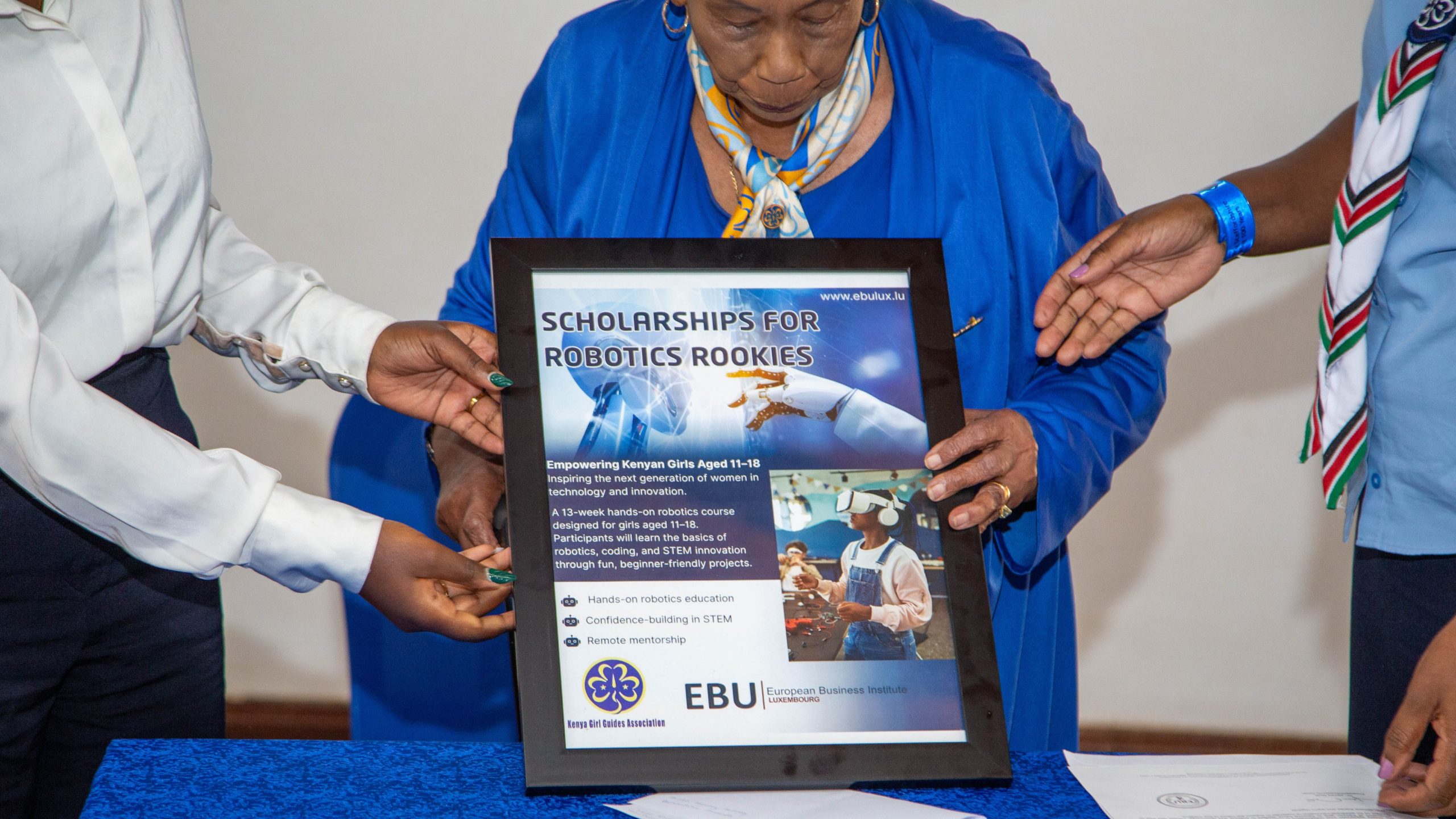
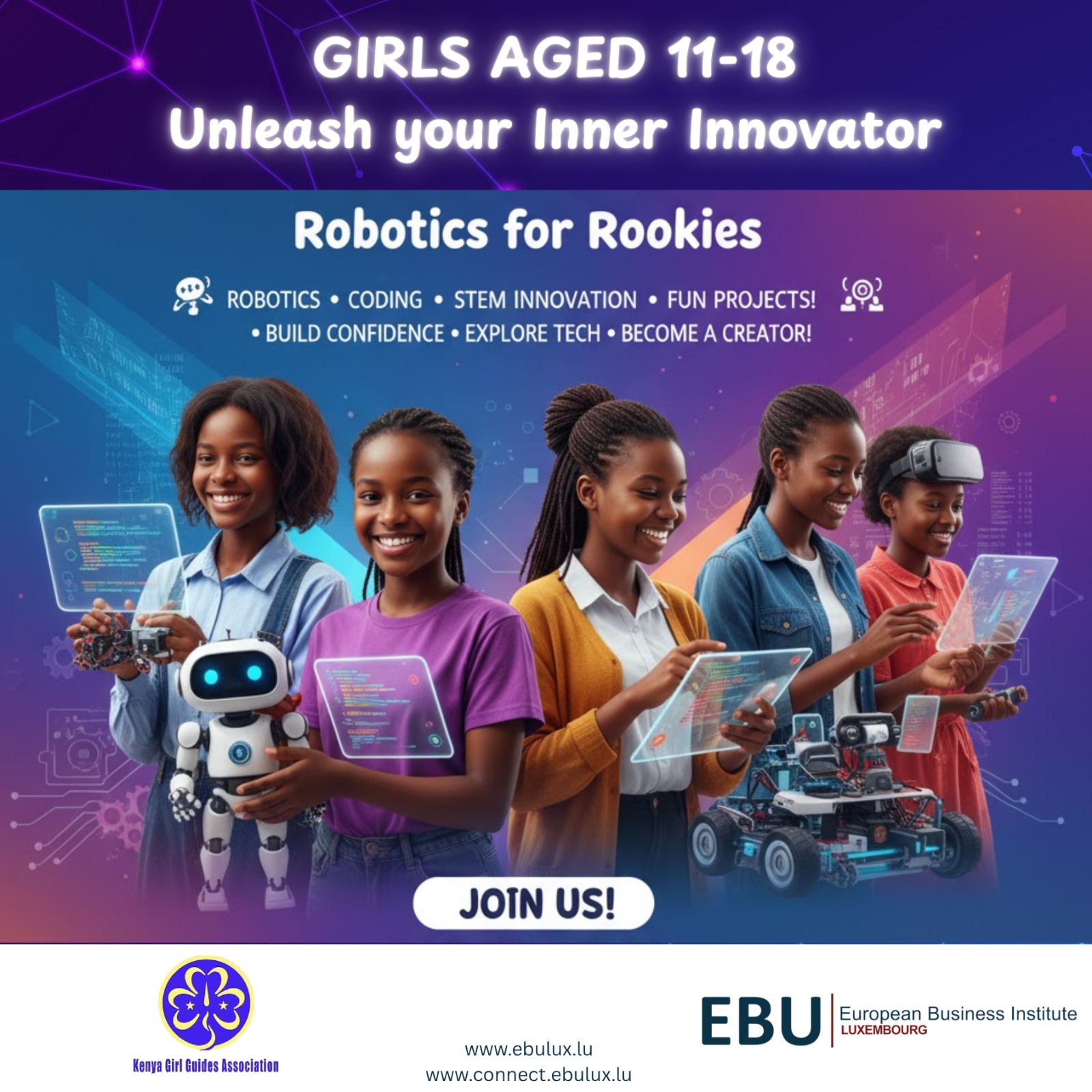
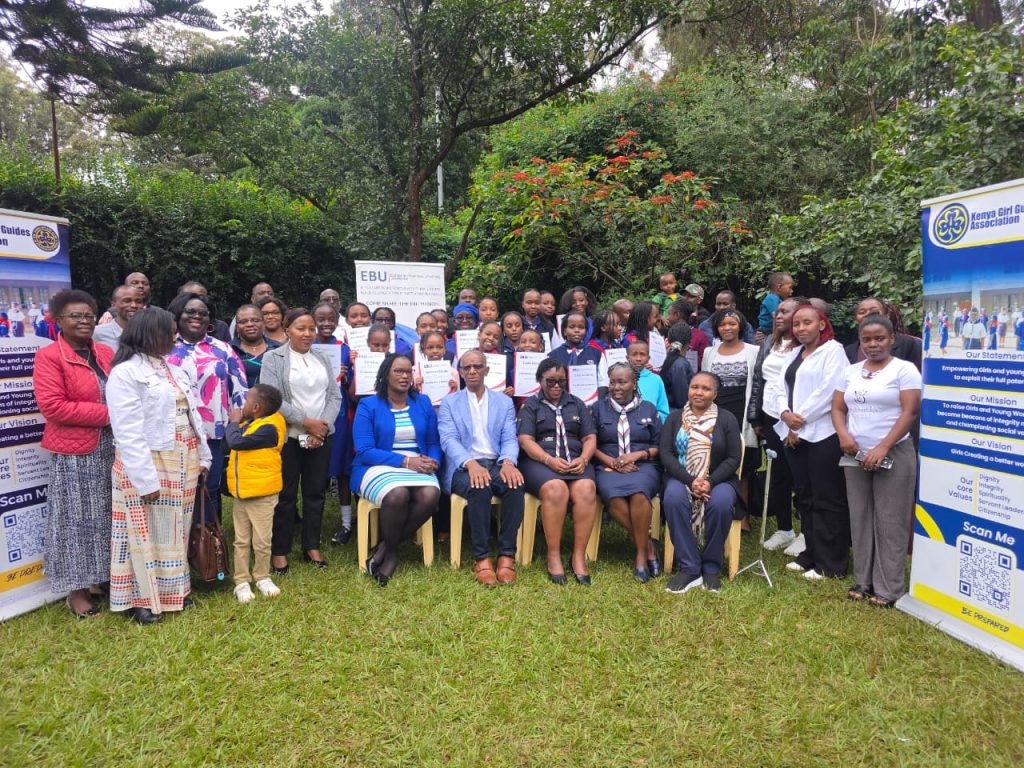
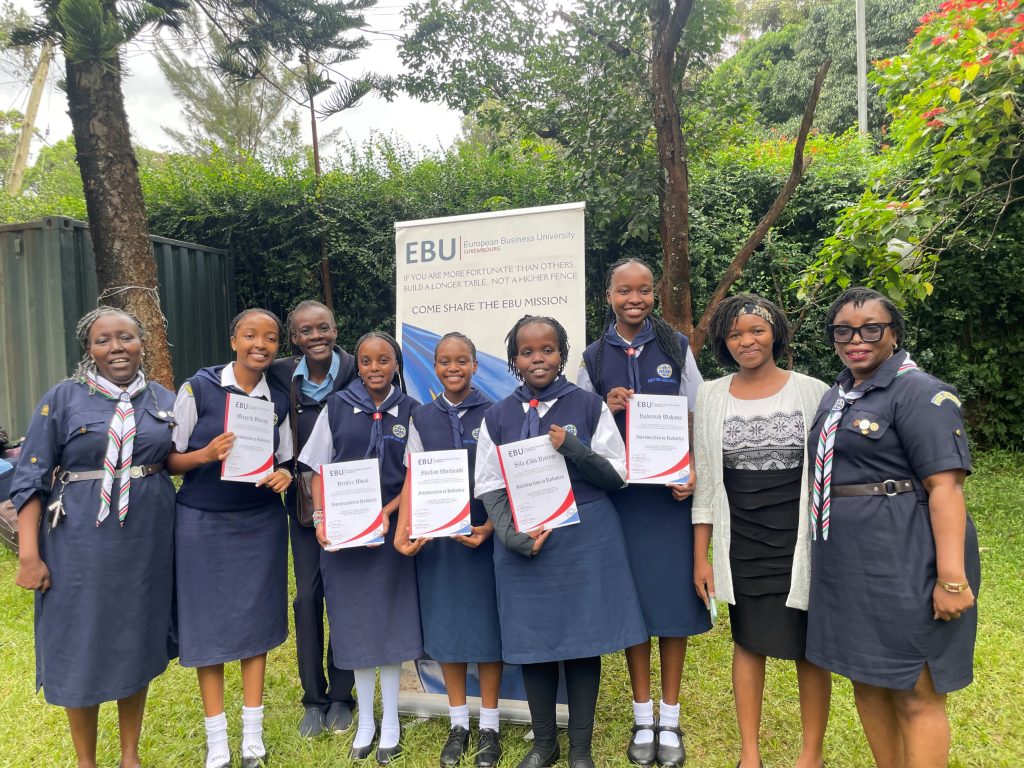
We are pleased to announce the official launch of “Robotics for Rookies,” a 13-week hands-on robotics education program for Kenyan girls aged 11 to 18. This initiative aligns directly with our commitment to advancing educational opportunities and promoting gender inclusivity in STEM. The program is a collaboration between the European Business Institute (EBU) of Luxembourg and the Kenya Girl Guides Association (KGGA), with curriculum support from Tech Academy, Luxembourg.
The main objective is to inspire and educate girls in robotics, build their confidence in STEM-related subjects, and create pathways into tech careers. The program is designed to be accessible and affordable to help remove financial barriers for families.
The launch included the presence of Minnesota State Representative Huldah Momanyi-Hiltsley (U.S. House of Representatives, District 38A), underscoring the international significance of this empowerment effort.
Program Structure: The 13-week course is tailored for the 11 to 18 age group, featuring engaging, beginner-friendly robotics projects.
The Grand Duchy of Luxembourg now officially recognises the State of Palestine. This decision was announced on 22 September 2025, on behalf of the Government, by Prime Minister Luc Frieden, accompanied by Deputy Prime Minister and Minister for Foreign Affairs and Foreign Trade, Xavier Bettel, at the High-Level International Conference on the Peaceful Settlement of the Question of Palestine and the Implementation of the Two-State Solution, held at United Nations Headquarters in New York.
With the advent of AI, Higher education is experiencing a period of rapid transformation, and at EBU (European Business Institute of Luxembourg), we are leading the way in reimagining student engagement and assessment. Traditional exams and essays, while still valuable, increasingly fall short in capturing the breadth of student achievement and readiness for today’s evolving AI driven workforce. Globally, surveys highlight this urgency: according to the European Commission, 39% of employers pinpoint graduate skill gaps as a hiring challenge, and recent data from The World Economic Forum indicates that 44% of workers’ core skills are expected to change by 2027.
To address these realities, our institute is committed to a progressive, evidence-based approach
Interactive and Active Learning
We integrate debates, real-world business simulations, and team-based projects into every program. Education research suggests that students retain up to 75% more knowledge through active learning compared to passive methods. In our classrooms, interactive breakout rooms, polls, quizzes, and ongoing online discussion forums are seamlessly embedded in the course delivery, driving higher participation and meaningful engagement.
Authentic and Alternative Assessments
At the EBU, we go beyond standard exams by implementing portfolios and oral presentations. We ensure an environment of learning that evolves with the times. This approach not only provides richer feedback but is also supported by data studies that show that new authentic assessment methods can increase student motivation and performance by up to 30%. Our instructors are also continuously rubric assessed for instructional skills in providing a holistic evaluation of their competency and classroom readiness.
Workforce Alignment through Flexible Course Design
Let’s be clear, our course design emphasizes collaboration, flexibility, and real-world problem solving. Structured group peer assignments and scenario-based learning mirror workplace demands. We prioritize assignments that challenge students to apply theoretical knowledge to current industry challenges, ensuring that our graduates are equipped with both the hard and soft skills in demand. As universities worldwide note rising concerns over graduate employability, our data-driven innovations ensure EBU alumni stand out.
In summary, education at the European Business Institute of Luxembourg is not just keeping pace with change; we intend to define new standards of excellence for tomorrow’s leaders and professionals.
Prof. Dr. James Mulli Academic Dean European Business Institute of Luxembourg
When you hear the word peace, what comes to mind? Is it the absence of war? The safety of your community? The ability to express yourself freely without fear?
Peace is more than just the silence of conflict—it’s a measurable, dynamic process that affects every part of our lives. Yet, in a world where headlines are filled with tensions, crises, and uncertainty, understanding how peace works is more important than ever.
Why Is It Important to Measure Peace?
Many people are surprised to learn that peace can be measured. Tools like the Global Peace Index (GPI) and the Positive Peace Index (PPI) give us a clear picture of how peaceful a country is—not just based on conflict, but also on safety, security, governance, and social resilience.
EBU is offering a Foundations of Peace course, where you’ll explore how these indexes work and discover what they reveal about your own country and the world at large. You’ll also learn how these measurements can guide policies, community programs, and even personal choices.
How Can I Build Peace in My Own Life and Community?
Peacebuilding isn’t just for diplomats and international organizations, it’s for everyone. The Foundations of Peace course will help you develop practical skills such as:
Nonviolent communication to resolve conflicts constructively.
Peace journalism to challenge harmful narratives.
Systems thinking to see how economic, environmental, and social factors connect.
AI-assisted reflection and problem-solving for modern peace challenges.
You’ll also explore inspiring real-world examples of peacebuilding in action from grassroots initiatives to global movements showing you how peace can start small and ripple outward.
Whether you’re a student, community leader, educator, or simply someone who wants to make a difference, the Foundations of Peace course will give you the tools to understand and contribute to peace in a meaningful way.
And right now, thanks to an extended scholarship award, you can enroll on a 94% scholarship award. Click the Apply now button below to view information on how to request a scholarship code.
Start Date:September 2026 Final Deadline to Apply:July 1st 2026
Ready to explore peace from the inside out?
Join the EBU PCS100 Foundations of Peace course on scholarship and discover how understanding peace can help you shape a better future for yourself, your community, and the world.
Ready to gain the skills that employers are looking for?
At the European Business Institute (EBU), our future-focused certificate programs are now open for enrollment — and thanks to our Career-Boosting Scholarships, students from Africa, Asia, and Latin America can access world-class education with up to a 97% scholarship award.
About the EBU Scholarship Impact Program
The EBU Scholarship Impact Program is part of our commitment to the Sustainable Development Goals (SDGs) in education. We aim to close the global learning gap by making high-quality, tuition-free education accessible to students in countries where such opportunities are limited.
Our programs are available fully online with live webinars and optional on-campus visits in Luxembourg during campus weeks.
Who Can Apply?
The scholarship program is open to:
Nationals currently residing in eligible countries listed HERE.
Refugees able to verify their status
Students from non-listed countries who can show resilience, determination, and academic promise
EBU offers a wide range of certificate courses that are skills-based, technology-driven, and aligned with the future of work. Here are some of the fields you can explore:
Business Administration and CPA Courses
Business Management with AI Integration
Strategic Management with AI Implementation
Marketing Management
Gender Equality Cases
Women and Leadership
Business & Sustainability
Reimagining Islamic Feminism
Foundations of Peace
AI for Leaders
AI for Leaders and Managers in Finance
AI for Leaders and Managers in Healthcare
AI for Leaders and Managers in Sustainability
AI for Leaders and Managers in Retail
AI for Business Leaders and Managers
Project Management Courses
Project Management, CAPM
Compliance Courses
AML/KYC/Compliance – Practical Frameworks
Market Integrity and Prevention of Market Abuse with AI Considerations
Customer/Investor Protection
Technology, Data Science and AI Courses
Introduction to Python with AI Integration
Introduction to AI
Statistics for Data Science
Data Science in Real Life
Machine Learning
Deep Learning Fundamentals
Natural Language Processing
Plutus/Haskell
Mobile Application Development
Applied Blockchain Technology and AI
PROFESSIONAL CERTIFICATE IN AI
Master the Core of Artificial Intelligence in One Program. Gain a solid and structured foundation in Artificial Intelligence through this comprehensive professional certificate.
Cybersecurity Professional Certificate
Introduction to Cybersecurity
Cybersecurity Attacks and Defense Fundamentals
Cybersecurity Compliance Frameworks
Advanced Threat Hunting & Incident Response
Robotics Courses
Introduction to Robotics
Principles of Robot Autonomy
CERTIFICATE IN DIGITAL INTELLIGENCE AND TECHNOLOGY INNOVATION
One Certificate – Four Breakthrough Field. Gain essential theoretical foundations in Artificial Intelligence, Cybersecurity, Robotics, and Blockchain—the driving forces behind the future of technology.
Education Courses
Learning Theory and Implications for Instruction
Special Educational Needs: Inclusive Approaches
Curriculum Design and Instructional Decision Making
Are you an educator, education administrator, or simply passionate about improving educational outcomes? Looking for quality continuing education courses that are affordable and relevant to today’s needs? We are excited to offer professional certificate courses tailored for educators, with up to a 96% scholarship award!
Enroll by July 1st to start your journey in our upcoming term!
Continuing education courses help teachers and educators stay updated with modern teaching strategies, new technologies, and inclusive practices. Whether you are renewing a license, advancing your career, or expanding your skills, our online courses offer a flexible, accessible, and affordable way to succeed.
Our programs are perfect if you’re searching for:
Education courses for teachers to meet career goals or employer requirements
Quality Affordable Continuing education courses for teachers
Special education courses for teachers
Online education courses for teachers
Explore Our Education Certificate Courses
Don’t miss this opportunity to take continuing education courses for teachers that are affordable, practical, and future-ready. Whether you are looking for quality continuing education courses, special education courses, or online education courses for teachers, we have the perfect fit for you.
Assessment and Evaluation (with AI Insights)
Master the essential concepts of measurement and evaluation in education. Learn how to measure student outcomes across cognitive, affective, and psychomotor domains using both traditional and multidimensional tools — from written exams to interviews and research projects. This course also includes AI insights to modernize your assessment techniques.
Topics: Formative and summative evaluation, validity, reliability, alternative assessments
Integration of Learning Technology (with AI Strategies)
Prepare to lead the future of education by integrating technology into your teaching. Learn to design pedagogically sound digital learning environments, use technology tools creatively, and foster collaboration among learning communities. Includes insights into AI-driven teaching strategies.
Ideal for: Primary and secondary educators, e-learning developers, education coordinators
Topics: Digital resource creation, project-based learning, technology evaluation, AI in education
Special Educational Needs: Inclusive Approaches
Gain a comprehensive understanding of inclusive education practices and how to effectively support exceptional learners. Learn collaborative strategies, early intervention techniques, and how to work with families and communities to promote success for all students.
Ideal for: Special education teachers, general teachers, school leaders
Topics: Diversity in learning, behavioral and cognitive differences, inclusion philosophy
Secure your spot today and become the educator of tomorrow!